
Deforestation and Warming Lower Amazon Rainforest Climate Threshold
A new study published in Nature warns that climate change reduces the deforestation threshold for rainfall loss, potentially pushing the region toward a tipping point by the 2040s.
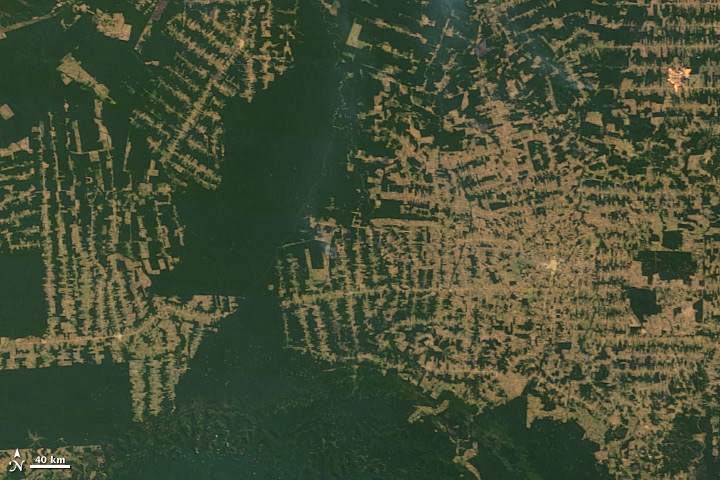
Reduced Rainfall Threshold
Research published in the journal *Nature* indicates that the combination of deforestation and global warming is accelerating the drying of the Amazon rainforest. The study finds that climate change significantly lowers the threshold of deforestation required to trigger substantial rainfall loss.
In high-emission scenarios, researchers determined that the deforestation threshold for rainfall loss could drop from 50% to as low as 10%. This suggests that the rainforest is more vulnerable to degradation than previously estimated, as the region's ability to generate its own rainfall is compromised by the removal of tree cover.
The Tipping Point
Scientists warn that these combined pressures could push the Amazon toward a perilous tipping point by the 2040s. This tipping point represents a critical threshold beyond which the forest may no longer be able to sustain itself, potentially transitioning into a different ecosystem.
According to Arie Staal, an Assistant Professor at Utrecht University and co-author of the study, global warming and deforestation interact to affect rainfall feedbacks across the entire Amazon system. The research utilized a combination of climate projections, hydrological modelling, and a network approach to analyze atmospheric moisture transport.
Economic and Environmental Impacts
The reduction in rainfall poses a direct threat to regional agriculture. The study notes that even a 4% drop in rainfall could result in a decrease in soybean yields by up to 8%.
Beyond agricultural losses, total deforestation of the rainforest is projected to result in extreme weather patterns. These include periods of dry spells interrupted by bouts of extreme rain, as well as strong winds that could stunt any attempts at forest regrowth. Additionally, rising temperatures are expected to cause heat stress for both human populations and local wildlife.
Climate Thresholds
Findings indicate that deforestation lowers the threshold for Amazon degradation to a level below 2°C of warming. This suggests that the forest may reach a state of collapse even if global temperature increases are kept below the targets often cited in international climate agreements.
While the removal of trees destroys immediate habitats, the study emphasizes the systemic harm caused to the region's hydrological cycle. The interplay between rising global temperatures and the loss of forest cover creates a feedback loop that accelerates the drying process faster than earlier data had suggested.
Sources (8)Open
- 1.Nature — Deforestation-induced drying lowers Amazon climate threshold
- 2.Msn — Deforestation and warming could push Amazon to tipping point by 2040s: Study
- 3.Msn — Climate change accelerates Amazon rainfall loss from deforestation
- 4.Idw-online — Deforestation Lowers Threshold for Amazon Degradation to Below 2°C Warming
- 5.Mongabay — Deforestation and warming could push Amazon to tipping point by 2040s ...
- 6.Pik-potsdam — Deforestation lowers threshold for Amazon degradation to below 2°C ...
- 7.Newscientist — Cutting down the Amazon will bring extreme rain, wind and heat
- 8.Phys — Deforestation is drying out the Amazon rainforest faster than previously thought
Topics
How NewsNews AI made this storyOpen
NewsNews AI researched this story across 8 sources, drafted it, and ran the result through an independent editorial pass. It cleared editorial review on first pass.
- 8 sources cited · linked in full at the bottom of the article
- Image license verified · cc0
- Independent editorial pass · approved
From the editor
All key factual claims are supported by their cited snippets: the 50%-to-10% deforestation threshold reduction in high-emission scenarios and the 4% rainfall/8% soybean yield figures are confirmed by source [3]; the 2040s tipping point warning is confirmed by sources [2] and [5]; Arie Staal's role and quote about rainfall feedbacks, plus the hydrological modelling methodology, are confirmed by source [6]; the below-2°C degradation threshold is confirmed by sources [4] and [6]; extreme weather consequences (dry spells, extreme rain, strong winds, heat stress) are confirmed by source [7]; and the general drying/hydrological harm framing is confirmed by source [8]. Source [1] has no snippet but is cited only for the general study publication claim, which is corroborated by multiple other sources. No fabricated quotes, no single-source dependency, and no unsupported claims were found.
Feedback
We want to hear from you, especially when something is wrong. No signup, no email required.
Keep reading
New Projections Detail Escalating Risks to Amazon Rainforest
Scientific projections and environmental reports highlight increasing threats from climate change, illegal mining, and infrastructure development in the Amazon.

El Niño-Driven Dry Season Intensifies Wildfires Across Indonesia
Satellite data shows over 224,000 hotspots as a record-breaking El Niño weather pattern fuels widespread fires and toxic smog.

Mineral Mining Drives Tropical Deforestation via Infrastructure and Artisanal Digs
New research indicates that infrastructure supporting mines, including roads and housing, destroys African forests at 34 times the rate of the mine sites themselves.