
El Niño Weather Pattern Threatens Southeast Asian Agriculture and Livelihoods
Hotter, drier weather is impeding rice and palm-oil production while driving up food and transport costs across the region.
Section

Hotter, drier weather is impeding rice and palm-oil production while driving up food and transport costs across the region.

New research suggests a cooling patch of water south of Greenland is evidence that the Atlantic Meridional Overturning Circulation is slowing.

New research indicates that infrastructure supporting mines, including roads and housing, destroys African forests at 34 times the rate of the mine sites themselves.

Pathologists discovering pathogens in dead sloths at a planned Florida attraction underscore the public health dangers associated with international wildlife trafficking.

The Iraqi government is increasing its focus on solar energy to mitigate an annual summer electricity crisis driven by extreme heat and power shortages.

The UK government has pledged a significant reduction in greenhouse gases by 2040, while the U.S. administration moves to dismantle ocean monitoring networks.

A review of regulatory tests found 'forever chemicals' in approximately 50% of the state's tested streams and rivers, including drinking water sources.

New satellite data indicates a surprise comeback for swampy mangrove forests, offering benefits for coastal communities and climate sequestration.

Research indicates that chemicals designed to be environmentally friendly are accumulating at high altitudes, challenging previous assumptions about their degradation.
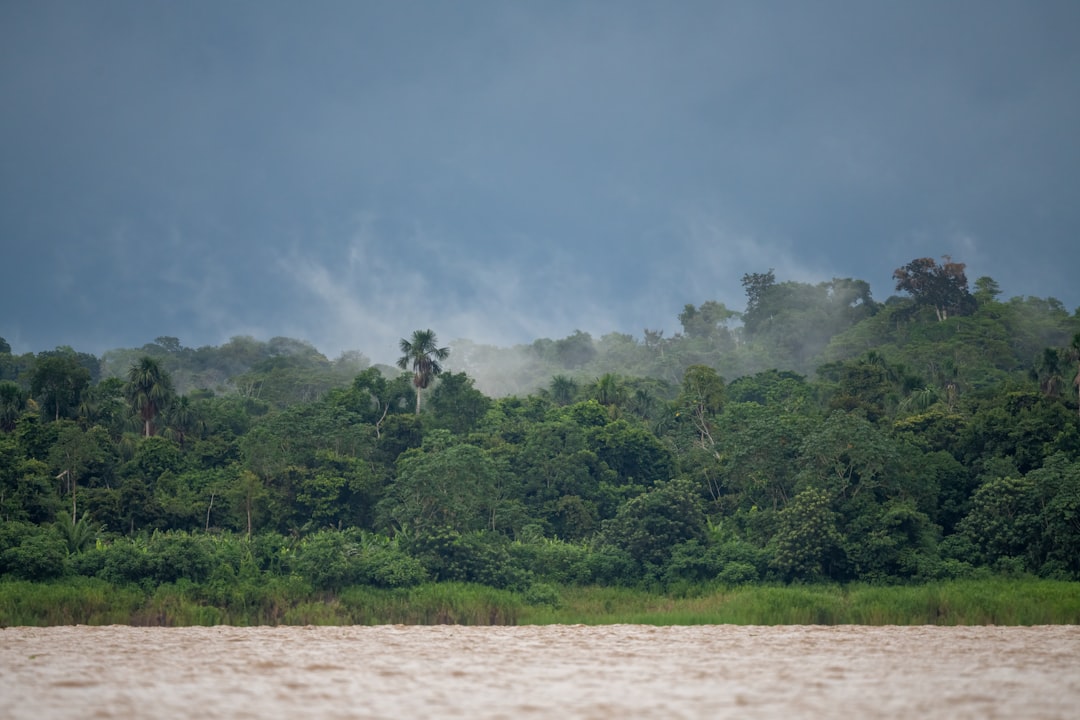
Scientific projections and environmental reports highlight increasing threats from climate change, illegal mining, and infrastructure development in the Amazon.

New research indicates that the destruction of US wetlands has significantly increased riverine flood losses, a risk exacerbated by recent Supreme Court rulings.

The World Meteorological Organization predicts a high likelihood of a moderate to strong El Niño event that could spike global temperatures and alter rainfall patterns.

A federal lawsuit claims diesel emissions from a migrant detention site in the Everglades threaten human health and the environment.

New Department of Energy guidance for $8.8 billion in rebate funding eliminates support for switching from fossil fuel heating to electric alternatives.

A study published in Nature finds that global storms producing hail larger than a marble could increase by up to 47% by the end of the century.

Local residents and conservationists warn that a federal logging project bordering the park could damage wildlife habitats and tourism.

Gigascale Capital will back founders developing solutions for global energy and material shortages.

Researchers have developed a laser-textured metal system that turns seawater into drinking water while recovering salts as solid materials.

Researchers introduced a cross-breed of Florida and Honduran elkhorn corals to test genetic resilience against warming oceans.

Surging energy demands from AI data centers have driven a record increase in US gas-fired power investment, overtaking China in fossil-fuel energy spending.

The world's most comprehensive disaster database faces potential closure due to funding cuts under the Trump administration.

Residents and environmentalists warn that increasing oil extraction in one of the world's most polluted ecosystems could exacerbate frequent spills and infrastructure failure.

France and the United Kingdom have registered record-breaking temperatures as a "heat dome" brings unseasonal warmth to the region.

Household energy costs in parts of eastern Australia are set to decrease as renewable energy and battery storage increase their share of the national grid.

Climate Change and Energy Minister Chris Bowen stated he has made it 'crystal clear' that major polluters, including BHP, must reduce carbon output at their operations.

Analysis indicates a change in how China measures its core climate goals has created a gap in emissions reporting comparable in size to Germany's total output.

Internal memos show the world's largest miner has cancelled or delayed decarbonization initiatives in its Western Australian iron ore operations.

Researchers warn that carbon credit systems fail to account for increasing risks from wildfires, droughts, and pests driven by climate change.

A Scottish charity warns that national planning frameworks fail to account for the carbon impact of AI infrastructure due to outdated definitions.

Thousands of residents have been ordered to evacuate in Southern California as officials work to prevent a cataclysmic explosion at an aerospace facility.

The revived bill aims to recognize clean air as a protected public right and address seasonal toxic smog through stronger monitoring and transboundary pollution regulations.

A new charter recognizes the River Wye catchment as a living ecosystem with intrinsic rights, marking a first for the United Kingdom.

Environmental investigators and lawmakers are questioning regulators after raw sewage and fuel leaks contaminated a river serving five million people.

Conservation groups have reached an agreement with the U.S. government to stop importing seafood from foreign fisheries that do not meet marine mammal protection standards.

A resolution passed by 141 countries follows a years-long campaign led by Pacific Island students to reshape international climate law.

A study published in Nature warns that carbon credit systems fail to accurately account for risks from wildfires, drought, and insect outbreaks in U.S. forests.

The revived legislation recognizes clean air as a protected public right and introduces penalties for major industrial and agricultural emitters.

Despite a decade-high surge in the construction of new coal-fired power plants, global power output from the fuel has declined.

The Portland Clean Energy Fund has raised $1 billion for climate action by taxing large corporations, sparking interest in other cities.

A human-caused blaze on the island off the California coast risks destroying plants and animals found nowhere else on Earth.

Crews are battling the Sandy Fire in California as flames approach a decommissioned nuclear reactor site near West Hills.

The U.S. 11th Circuit Court of Appeals ruled that Mobile Baykeeper has standing to challenge the closure plan for a 21.7 million-ton coal ash pond.

The all-stock deal would create the world's largest regulated electric utility amid surging electricity demand from AI data centers.

Atmospheric chemists warn that the rapid increase in satellite megaconstellations is causing unregulated high-altitude pollution with potentially serious environmental consequences.

The U.S. Environmental Protection Agency plans to push back compliance deadlines for light- and medium-duty vehicle emission standards until 2029.

The EPA is proposing rules to rescind Biden-era restrictions on four PFAS compounds and delay standards for others.

Scientists warn that a developing El Niño pattern is likely to intensify heatwaves, droughts, and floods, with effects exacerbated by long-term global warming.

A Europe-wide collaboration has extracted a 2.8-kilometre-deep ice core in Antarctica that reveals atmospheric conditions dating back 1.2 million years.

Research from the University of Oxford and University College London indicates that aerosols from coal-fired power plants block sunlight and lower the efficiency of solar PV installations.

The Trump administration argues before federal judges that it alone possesses the power to determine if an energy emergency exists to keep coal plants operational.

Researchers are exploring the use of silicate rocks like basalt as an alternative to limestone to lower the energy requirements and carbon footprint of cement production.

New analysis and industry data show a growing divergence between China and the United States in the development and dominance of global clean energy systems.

New data from meteorological agencies indicate an increasing probability of a powerful El Niño event that could push global temperatures past modern records.

New forecasts indicate an increasing likelihood that a developing El Niño in the tropical Pacific could be one of the strongest on record.

A new study published in Nature finds that rainfall concentrated in heavier storms reduces overall landscape moisture retention, regardless of total annual precipitation.

The EU plans to expand carbon pricing to international flights, a move that may increase tensions with the United States.

A new study indicates that combined deforestation and global warming could push two-thirds of the Amazon rainforest toward a tipping point by the 2040s.

Data shows that on April 27, every single one of the world's 50 hottest cities was located within India.

The Indian Biogas Association claims a 10% mandatory blending of fermented organic manure with chemical fertilizers could save $2 billion in annual imports.

The administration plans to eliminate 55 of the 77 research stations operated by the world's largest forest research agency.

A new study published in Nature warns that climate change reduces the deforestation threshold for rainfall loss, potentially pushing the region toward a tipping point by the 2040s.

Declining groundwater levels in rural Colorado are coinciding with an increase in heavy metal contamination in residential drinking wells.

Analysts and advocates warn that windfall profits for the oil and gas sector resulting from the conflict with Iran could incentivize fossil fuel expansion and hinder the energy transition.

Analysis shows renewable energy deployment reduced the United Kingdom's reliance on fossil fuel imports amid Middle East geopolitical instability.

Updated forecasts from the European Center for Medium-Range Weather Forecasts indicate a high probability of a 'super El Niño' in 2026.

New satellite monitoring data shows a sharp drop in tropical primary forest loss in 2025, though climate-driven fires increased in non-tropical regions.

The state's energy grid discharged over 12,000 megawatts from battery arrays for the first time in late March.

Research published in Nature reveals that minuscule plastic particles in the atmosphere interact with sunlight to trap heat.

The International Energy Agency reports that tackling methane leaks could unlock billions of cubic metres of gas to alleviate energy supply pressures caused by the Iran crisis.

The Pentagon is holding up approvals for approximately 165 onshore wind projects on private lands, citing reviews of national security impacts.