
New Projections Detail Escalating Risks to Amazon Rainforest
Scientific projections and environmental reports highlight increasing threats from climate change, illegal mining, and infrastructure development in the Amazon.
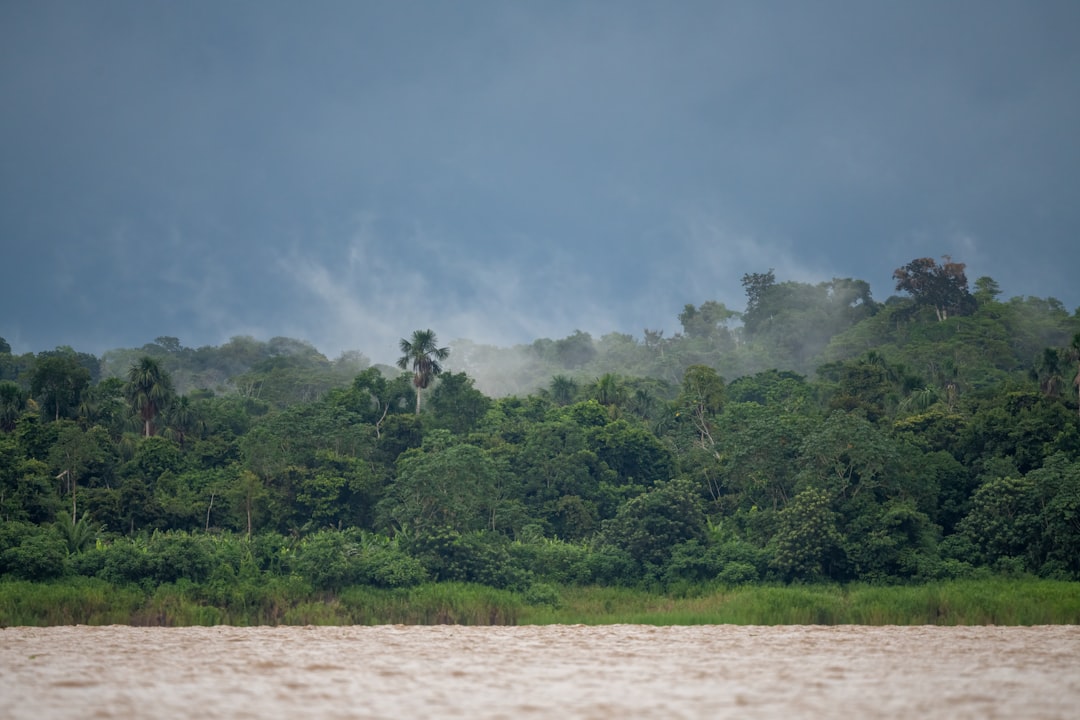
Climate Risks and Carbon Cycle
New scientific data and projections indicate that the Amazon rainforest is facing heightened risks from shifting climatic conditions. According to experts cited by NBC News, hotter and drier conditions are expected to increase the risk of wildfires within the region.
The Amazon currently functions as a carbon sink, removing heat-trapping carbon dioxide from the atmosphere. However, there are concerns that these environmental pressures could transform the rainforest into a region that worsens global warming by releasing stored carbon rather than absorbing it. This shift is linked to broader global trends; United Nations officials have stated that current efforts to curb climate change have been insufficient.
Infrastructure and Deforestation Drivers
Physical development continues to pose a direct threat to the biome's integrity. The Brazilian government has announced an investment of $75 million in a highway project through the Amazon. While this is accompanied by an environmental protection plan, scientific research indicates that new roads often drive deforestation by facilitating the creation of illegal side roads.
A 2014 study published in the journal *Biological Conservation* found that 95% of forest clearing occurs within 5.5 kilometers (3.4 miles) of roads. The proposed highway cuts through some of the biome's most well-preserved regions, including Indigenous territories and protected areas.
Illegal Extraction and Governance Gaps
Despite government crackdowns, illegal resource extraction remains a significant pressure on the rainforest. A study by Greenpeace found that billions of dollars worth of gold continue to be extracted illegally from Brazil's Amazon rainforest. This occurs despite pledges made by President Luiz Inacio Lula da Silva in 2023 to eliminate wildcat mining from protected areas and Indigenous lands.
Furthermore, there is a gap between the legal designation of protected areas and their actual management. While Brazil maintains one of the world's largest systems of protected areas, financing for these regions has not kept pace with their expansion. Many of these areas are vast and remote, making enforcement expensive as it requires long patrols across rivers and informal roads.
Ecological Functionality and Biodiversity
Environmental analysts note that a forest may remain visible on maps while losing the core functions that sustain its ecosystem. Factors such as deforestation and tipping points are used as measures of health, but biodiversity continues to decline even in areas where laws exist and international pledges have been made.
The disparity in funding for nature conservation also persists at a global level. Approximately $5 trillion in public subsidies continue to support activities that are harmful to nature, while only about $220 billion is directed toward sustainable use and biodiversity conservation.
Sources (8)Open
- 1.Nature — Robust projections of risks to the Amazon rainforest
- 2.Nbcnews — Think it’s hot now? The next five years will smash records, U.N. says - NBC News
- 3.Butlernature — Six gaps shaping the Amazon’s future - Butler Nature
- 4.Greenwichtime — Brazil to invest $75 million in highway through Amazon and unveils environmental protection plan - Greenwich Time
- 5.Nature — Shifting hail hazard under global warming and effects on crop hail risk - Nature
- 6.Edie — Bringing nature into the boardroom: How directors can turn risk into strategy - edie.net
- 7.Reuters — Illegal miners extract billions in Amazon gold despite Brazil crackdown, Greenpeace finds - Reuters
- 8.Butlernature — The Amazon’s protected areas exist on paper. Many still lack the money to work. - Butler Nature
Topics
How NewsNews AI made this storyOpen
NewsNews AI researched this story across 8 sources, drafted it, and ran the result through an independent editorial pass. It cleared editorial review on first pass.
- 8 sources cited · linked in full at the bottom of the article
- Image license verified · unsplash
- Independent editorial pass · approved
From the editor
Verified all factual claims against available snippets. Source [1] has no snippet but is cited only for a general framing claim consistent with its title. Sources [2], [3], [4], [6], [7], and [8] all support their attributed claims accurately — wildfire risk, carbon sink reversal, UN insufficiency, road-deforestation link, 95% clearing within 5.5km, Greenpeace illegal mining finding, Lula's 2023 pledge, protected-area funding gap, biodiversity decline despite laws, and the $5trn/$220bn subsidy figures are all directly supported by the respective snippets. No fabricated quotes, no contradictions, no unsupported overreach detected. Multiple sources are used throughout, satisfying the single-source paraphrasing rule.
Feedback
We want to hear from you, especially when something is wrong. No signup, no email required.
Keep reading

Panama Canal to Cap Daily Ship Transits Amid El Niño Drought
The Panama Canal Authority will reduce daily vessel transits starting in September to manage water shortages caused by an intensifying El Niño event.

Atlantic 'Cold Blob' Linked to Weakening Ocean Current System
New research suggests a cooling patch of water south of Greenland is evidence that the Atlantic Meridional Overturning Circulation is slowing.

Mineral Mining Drives Tropical Deforestation via Infrastructure and Artisanal Digs
New research indicates that infrastructure supporting mines, including roads and housing, destroys African forests at 34 times the rate of the mine sites themselves.