
Nanoscale 'Conveyor Belt' Teleports Quantum State of Electron
Researchers have developed a system to shuttle mobile spin qubits in silicon, enabling the teleportation of quantum states across a chip.

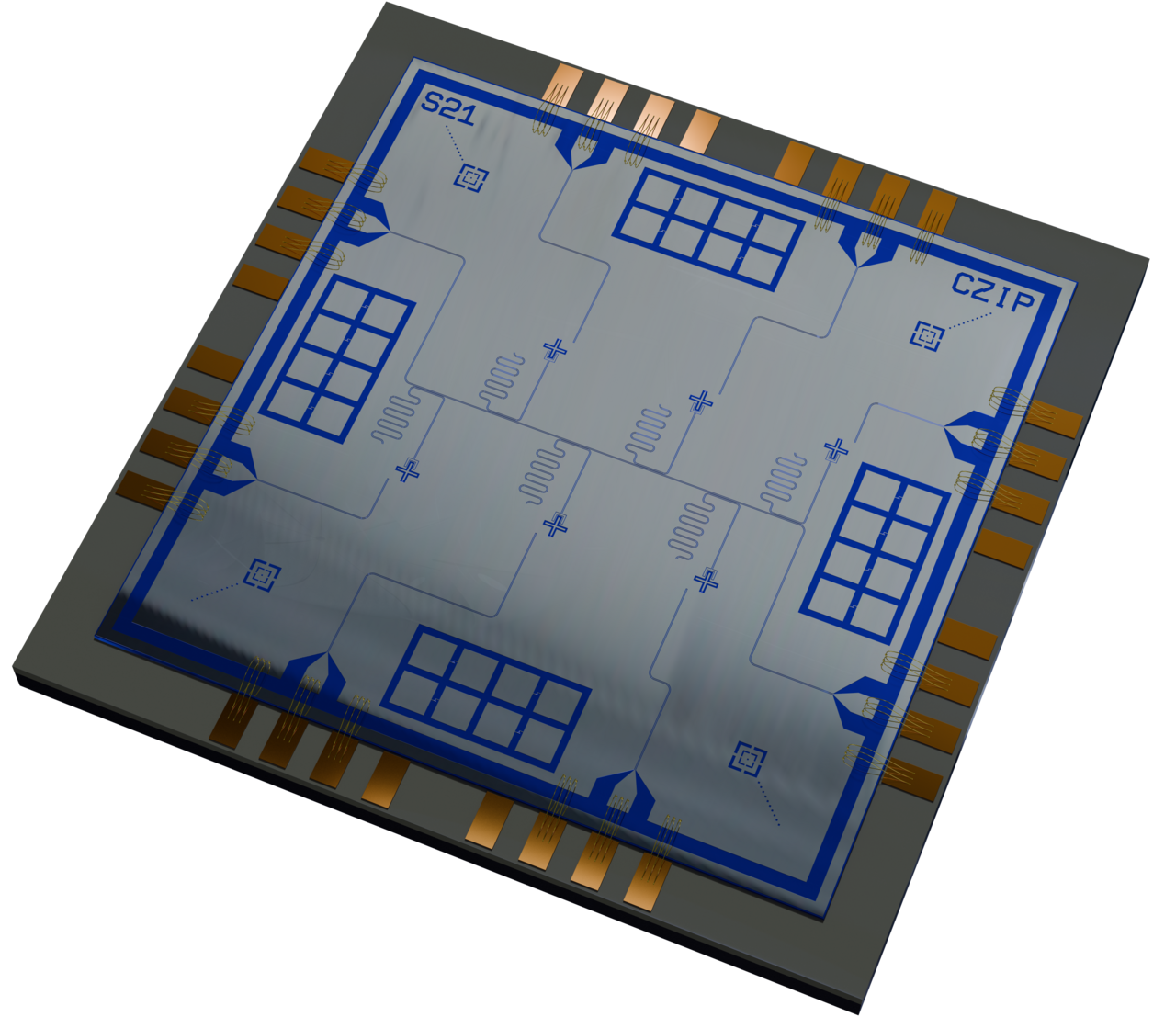
Researchers have demonstrated a nanoscale 'conveyor belt' capable of teleporting the quantum state of an electron. The system utilizes mobile spin qubits in silicon that can be shuttled to specific locations within a circuit to perform quantum processes,.
Mechanism of Mobile Qubits
The technology relies on the movement of quantum bits, or qubits, across a silicon chip. These mobile qubits are designed to be shuttled to where they are required in a circuit to execute specific operations,. According to the research published in Nature, the quantum dots used in this process are defined by three layers of Ti:Pd gates.
This movement allows for the implementation of state teleportation, a process where the quantum state of a particle is transferred from one location to another,. In a standard quantum teleportation protocol, a quantum state is sent from one station to another using a pair of entangled particles.
Implementation in Silicon
The use of silicon-based spin qubits is viewed as a promising path toward scalable quantum computing. Recent experimental advancements in this field have already demonstrated basic programmability and high-fidelity universal logic gates. However, implementing more complex quantum information protocols involving many qubits has remained a critical challenge for practical realization.
The development of the nanoscale conveyor belt addresses these challenges by allowing qubits to move, rather than remaining stationary,. This capability has been used to perform two-qubit logic and teleportation,.
Implications for Quantum Computing
The ability to move qubits on a chip is described as a step toward the creation of everyday quantum computers. By enabling the transport of quantum information via a conveyor-belt mechanism, researchers can potentially overcome the physical constraints of stationary qubit architectures,.
This specific implementation of teleportation with mobile spin qubits in silicon represents a shift toward more flexible quantum circuit designs,.
Sources (8)Open
- 1.Nature — Nanoscale ‘conveyor belt’ teleports quantum state of electron
- 2.Phys — Mobile qubits on a chip move us a step closer to everyday quantum computers
- 3.Rsc — On the feasibility of quantum teleportation protocols implemented with silicon devices - Nanoscale (RSC Publishing) DOI:10.1039/D5NR02992A
- 4.Scilit — Nanoscale 'conveyor belt' teleports quantum state of electron | Scilit
- 5.Wikipedia — Quantum teleportation - Wikipedia
- 6.Nature — Two-qubit logic and teleportation with mobile spin qubits in silicon | Nature
- 7.Deepdyve — Nanoscale 'conveyor belt' teleports quantum state of electron - DeepDyve
- 8.Linkedin — Nanoscale 'conveyor belt' teleports quantum state of electron | John ...
Topics
How NewsNews AI made this storyOpen
NewsNews AI researched this story across 8 sources, drafted it, and ran the result through an independent editorial pass. It cleared editorial review on first pass.
- 8 sources cited · linked in full at the bottom of the article
- Image license verified · cc0
- Independent editorial pass · approved
From the editor
Verified all major claims against available snippets: the nanoscale conveyor belt teleporting electron quantum states is supported by sources [1], [7], [8]; mobile spin qubits shuttled to circuit locations is confirmed by [7] and [8]; Ti:Pd gate layers are directly mentioned in [6]; silicon spin qubits as scalable candidates with high-fidelity logic gates is supported by [3]; two-qubit logic and teleportation claim is backed by [4] and [6]; the quantum teleportation protocol description aligns with [5]. Multiple sources are used throughout, no fabricated quotes are present, and the headline accurately reflects the content.
Feedback
We want to hear from you, especially when something is wrong. No signup, no email required.
Keep reading
Researchers Improve Quantum Processor Logical Error Rates
A new study published in Nature demonstrates a reduction in logical error rates through advanced quantum correction and detection techniques.

Rapid Stellar Spin May Explain How Stars Survive Supermassive Black Holes
Astronomers have identified stars that repeatedly survive close encounters with supermassive black holes, producing bursts of light that fade over time.

Chinese JUNO Experiment Releases First Physics Results on Neutrino Mass
The Jiangmen Underground Neutrino Observatory has delivered early data that improves measurements of key neutrino properties and targets the mystery of mass hierarchy.