
Researchers Improve Quantum Processor Logical Error Rates
A new study published in Nature demonstrates a reduction in logical error rates through advanced quantum correction and detection techniques.
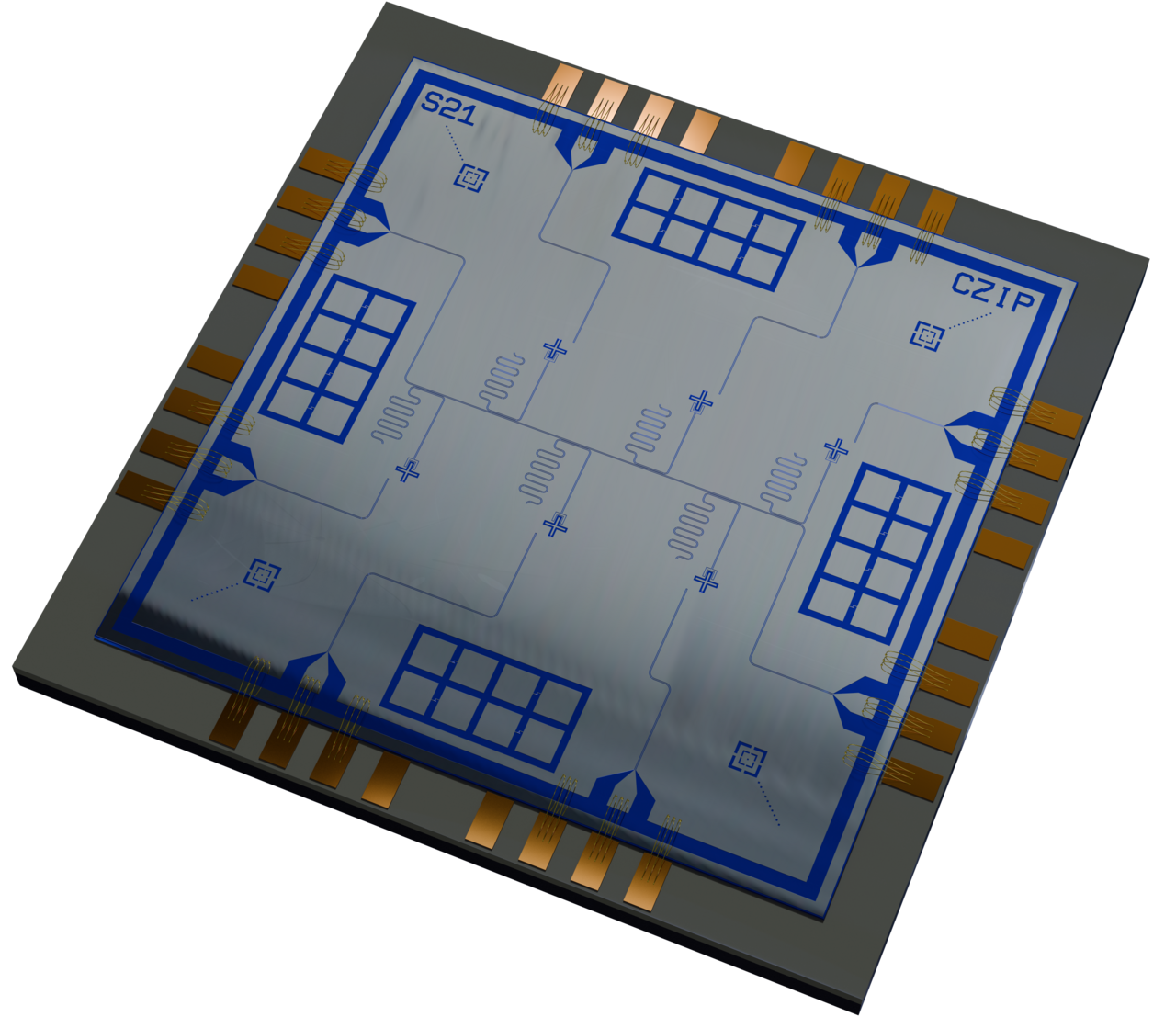
Breakthrough in Logical Error Reduction
Researchers have demonstrated an improvement in the logical error rates of a quantum processor by utilizing combined correction and detection methods. The findings, published in the journal *Nature*, address one of the primary hurdles in quantum computing: the inherent instability of quantum information units, known as qubits.
Quantum processors are highly sensitive to environmental disturbances, including magnetic fields, electromagnetic fluctuations, and temperature changes. These factors, collectively termed "noise," can alter a qubit's delicate state and lead to computational errors. By implementing improved correction and detection protocols, the researchers have reduced the frequency of these logical errors.
The Role of Logical Qubits
To combat physical error rates, scientists employ "logical qubits," which are groups of physical qubits that work together to protect information. Recent research has explored various methods for enhancing these systems, including the use of metastable neutral atoms to create logical qubits with erasure conversion.
Other advancements in the field have focused on fault-tolerant quantum memory and reducing error rates below specific thresholds, such as those associated with the surface code. The ability to perform repeated error correction while maintaining error rates that are lower than those of individual physical qubits is a key benchmark for the viability of these processors.
Industry Context and Alternative Approaches
The pursuit of error-free quantum computing has led to several competing technical strategies. Some researchers have proposed relying on Majorana modes to protect qubits from environmental noise and boost fault tolerance.
Simultaneously, the industry is seeing a rise in neutral-atom quantum processors. According to Joe Fitzsimons of Horizon Quantum Computing, the neutral atom approach is particularly advantageous because it facilitates an easier conversion between physical qubits and logical qubits. This technical path is being pursued by several firms, including Pasqal, which recently inaugurated Italy's first neutral-atom quantum computer — the company's third system in Europe.
Timeline to Practical Application
While the reduction of logical error rates represents a significant step, experts disagree on when these processors will become practically useful. Thomas Wong of Creighton University stated that while it is plausible for useful, error-free quantum computers to arrive by 2028, it is equally possible that the timeline could be extended by several years.
Other current research efforts are focusing on hardware reliability and security. For instance, new developments in self-testing quantum chips aim to detect hardware defects or tampering in real time, as physical quantum components degrade over time.
Sources (6)Open
- 1.Nature — Improved quantum processor logical error rates via correction and detection
- 2.Nature — Logical qubits with erasure conversion using metastable neutral atoms - Nature
- 3.Newscientist — Are useful and error-free quantum computers only two years away? - New Scientist
- 4.Phys — Majorana modes withstand disorder in atomic chains, boosting fault-tolerant quantum computing - Phys.org
- 5.Hpcwire — HKU Researchers Develop Cryogenic Neuromorphic Chip for Quantum Computing and Deep-Space Missions - HPCwire
- 6.Techxplore — Self-testing quantum chip generates certified random numbers while checking its hardware in real time - Tech Xplore
Topics
How NewsNews AI made this storyOpen
NewsNews AI researched this story across 6 sources, drafted it, and ran the result through an independent editorial pass. It cleared editorial review on first pass.
- 6 sources cited · linked in full at the bottom of the article
- Image license verified · cc-by
- Independent editorial pass · approved
From the editor
Verified that both previously flagged issues were correctly fixed: Pasqal is now accurately described as inaugurating Italy's first neutral-atom quantum computer and the company's third system in Europe [^5], and the misrepresentation about HKU's chip has been removed. All remaining claims check out against their cited snippets — source [^4] supports the noise/qubit sensitivity claims, source [^3] supports the Fitzsimons quote and Wong timeline quote, source [^2] supports the logical qubit and error correction claims, and source [^6] supports the self-testing chip paragraph. Source [^1] has no snippet but is cited only for the headline finding, which is consistent with the title/URL. No fabricated quotes, no unsupported overreach, and no single-source saturation detected.
Feedback
We want to hear from you, especially when something is wrong. No signup, no email required.
Keep reading

Chinese JUNO Experiment Releases First Physics Results on Neutrino Mass
The Jiangmen Underground Neutrino Observatory has delivered early data that improves measurements of key neutrino properties and targets the mystery of mass hierarchy.

Fusion Startup Xcimer Activates World's Largest Privately Owned Laser
The company has launched its Phoenix laser system as a first step toward building a commercial fusion power plant for grid-scale electricity.

University of Houston Scientists Break 30-Year Superconductivity Record
Researchers achieved a record transition temperature of 151 Kelvin for a superconductor operating at ambient pressure.