
Quantum Light Source Advances Attosecond Science
New developments in quantum light sources, including bright squeezed vacuum, are enhancing the ability to observe electron motion on the shortest accessible timescales.
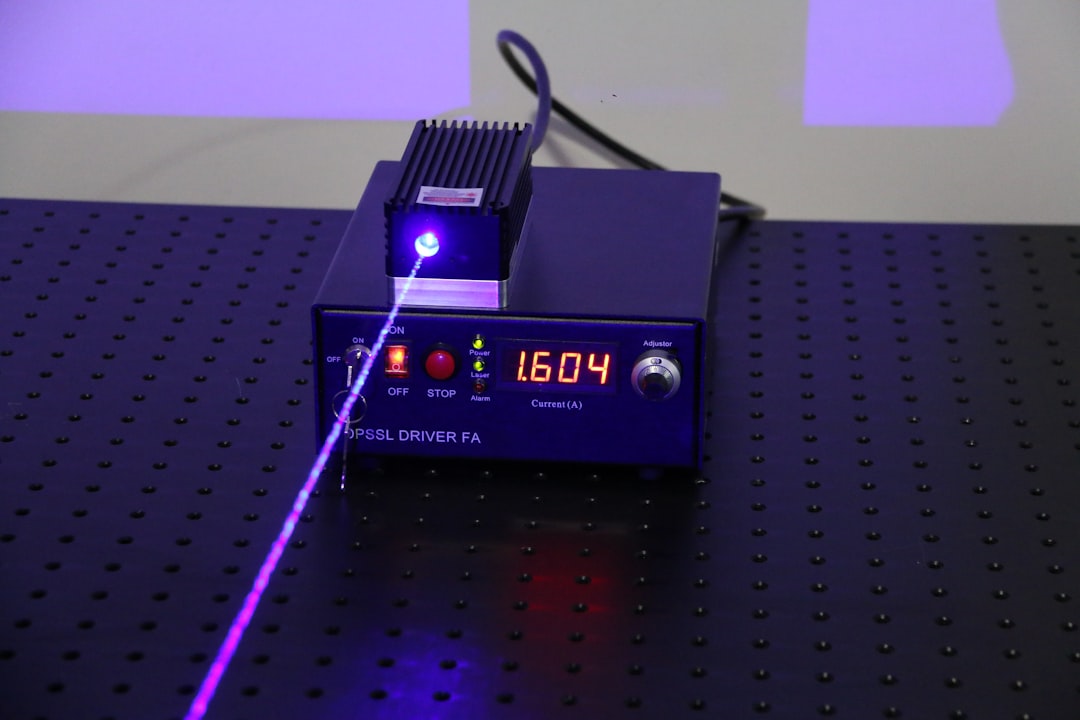
Advancements in Attosecond Observation
Recent developments in quantum light sources are providing a boost to the field of attosecond science. An attosecond is defined as one quintillionth of a second (10⁻¹⁸ seconds), a duration that corresponds to the natural timescale of electron motion within matter.
These ultrafast pulses allow researchers to capture electron and light-matter dynamics on the shortest timescales currently accessible to controlled experiments. Because of this capability, attosecond pulses have become indispensable tools for high-resolution imaging, strong-field physics, and ultrafast spectroscopy.
Context and Scientific Significance
The importance of these experimental methods was highlighted in 2023, when the Nobel Prize in Physics recognized the generation and measurement of attosecond light pulses. These tools are critical because they allow scientists to observe the movement of electrons, which occurs too quickly for traditional laser pulses to capture.
Further developments in the field are moving toward the creation of megahertz, terawatt-class attosecond X-rays. Such advancements aim to increase the frequency and power of these pulses, potentially expanding the range of materials and reactions that can be studied in real-time.
Broader Quantum Applications
While attosecond science focuses on timescales, other quantum light research is addressing information processing. For example, recent studies have demonstrated the ability to send and measure quantum information across multiple frequency channels simultaneously, rather than one at a time.
Additionally, researchers are exploring new ways to generate specific types of light required for these experiments. Scientists at the University of Chicago have announced a method to create infrared light using quantum dots, addressing a long-standing difficulty in producing this specific spectrum of light more efficiently.
Sources (8)Open
- 1.Nature — Quantum light source boosts attosecond science
- 2.Phys — Quantum entanglement between electrons and ions captured at attosecond timescale
- 3.Uchicago — UChicago scientists find better way to make infrared light—using quantum dots
- 4.Phys — Quantum bottleneck breaks wide open as one light beam carries 23 secure channels at the same time
- 5.Eurekalert — Ultrafast lasers for attosecond science
- 6.Eurekalert — AttoSHINE: Toward Megahertz, Terawatt-Class Attosecond X-rays An attosecond (10⁻¹⁸ seconds) corresponds to the natural timescale of electron motion in matter. In 2023, the ...
- 7.Wikipedia — Quantum - Wikipedia
- 8.Linkedin — Quantum light source boosts attosecond science | Marcus Dahlström
Topics
How NewsNews AI made this storyOpen
NewsNews AI researched this story across 8 sources, drafted it, and ran the result through an independent editorial pass. It cleared editorial review on first pass.
- 8 sources cited · linked in full at the bottom of the article
- Image license verified · unsplash
- Independent editorial pass · approved
From the editor
Verified all cited claims against source snippets. Source [^6] supports the attosecond definition (10⁻¹⁸ s), electron motion timescale, 2023 Nobel Prize, and megahertz/terawatt-class X-ray direction. Source [^5] supports the ultrafast dynamics and indispensable tools claims. Source [^4] supports the multi-channel quantum information claim. Source [^3] supports the UChicago infrared/quantum dots claim. Source [^8] supports the "bright squeezed vacuum" reference in the dek. No fabricated quotes, no contradictions, no single-source saturation. All keyFact sourceIndexes are correctly assigned.
Feedback
We want to hear from you, especially when something is wrong. No signup, no email required.
Keep reading

Chinese JUNO Experiment Releases First Physics Results on Neutrino Mass
The Jiangmen Underground Neutrino Observatory has delivered early data that improves measurements of key neutrino properties and targets the mystery of mass hierarchy.
Researchers Improve Quantum Processor Logical Error Rates
A new study published in Nature demonstrates a reduction in logical error rates through advanced quantum correction and detection techniques.

University of Houston Scientists Break 30-Year Superconductivity Record
Researchers achieved a record transition temperature of 151 Kelvin for a superconductor operating at ambient pressure.