

Climate
California Firefighters Work to Protect Former Nuclear Reactor Site
Crews are battling the Sandy Fire in California as flames approach a decommissioned nuclear reactor site near West Hills.
Section
78 stories · page 3 of 4
Crews are battling the Sandy Fire in California as flames approach a decommissioned nuclear reactor site near West Hills.

The U.S. 11th Circuit Court of Appeals ruled that Mobile Baykeeper has standing to challenge the closure plan for a 21.7 million-ton coal ash pond.

The all-stock deal would create the world's largest regulated electric utility amid surging electricity demand from AI data centers.

Atmospheric chemists warn that the rapid increase in satellite megaconstellations is causing unregulated high-altitude pollution with potentially serious environmental consequences.

The U.S. Environmental Protection Agency plans to push back compliance deadlines for light- and medium-duty vehicle emission standards until 2029.

The EPA is proposing rules to rescind Biden-era restrictions on four PFAS compounds and delay standards for others.

Scientists warn that a developing El Niño pattern is likely to intensify heatwaves, droughts, and floods, with effects exacerbated by long-term global warming.

A Europe-wide collaboration has extracted a 2.8-kilometre-deep ice core in Antarctica that reveals atmospheric conditions dating back 1.2 million years.

Research from the University of Oxford and University College London indicates that aerosols from coal-fired power plants block sunlight and lower the efficiency of solar PV installations.

The Trump administration argues before federal judges that it alone possesses the power to determine if an energy emergency exists to keep coal plants operational.

Researchers are exploring the use of silicate rocks like basalt as an alternative to limestone to lower the energy requirements and carbon footprint of cement production.

New analysis and industry data show a growing divergence between China and the United States in the development and dominance of global clean energy systems.

New data from meteorological agencies indicate an increasing probability of a powerful El Niño event that could push global temperatures past modern records.

New forecasts indicate an increasing likelihood that a developing El Niño in the tropical Pacific could be one of the strongest on record.

A new study published in Nature finds that rainfall concentrated in heavier storms reduces overall landscape moisture retention, regardless of total annual precipitation.

The EU plans to expand carbon pricing to international flights, a move that may increase tensions with the United States.

A new study indicates that combined deforestation and global warming could push two-thirds of the Amazon rainforest toward a tipping point by the 2040s.

Data shows that on April 27, every single one of the world's 50 hottest cities was located within India.

The Indian Biogas Association claims a 10% mandatory blending of fermented organic manure with chemical fertilizers could save $2 billion in annual imports.

The administration plans to eliminate 55 of the 77 research stations operated by the world's largest forest research agency.
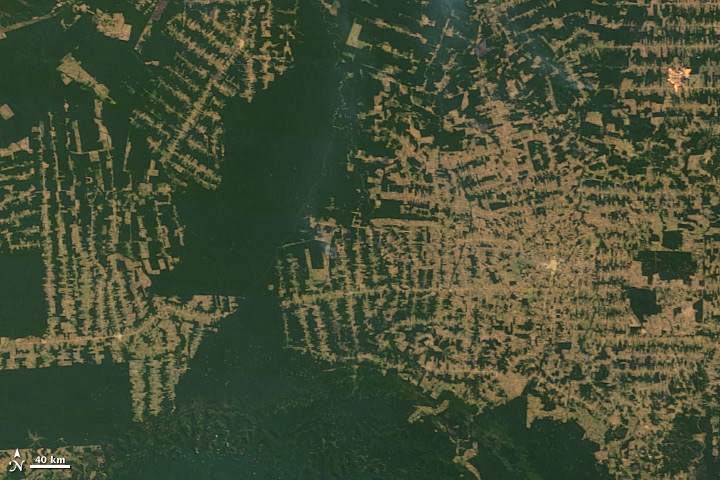
A new study published in Nature warns that climate change reduces the deforestation threshold for rainfall loss, potentially pushing the region toward a tipping point by the 2040s.

Declining groundwater levels in rural Colorado are coinciding with an increase in heavy metal contamination in residential drinking wells.

Analysts and advocates warn that windfall profits for the oil and gas sector resulting from the conflict with Iran could incentivize fossil fuel expansion and hinder the energy transition.

Analysis shows renewable energy deployment reduced the United Kingdom's reliance on fossil fuel imports amid Middle East geopolitical instability.