
Science
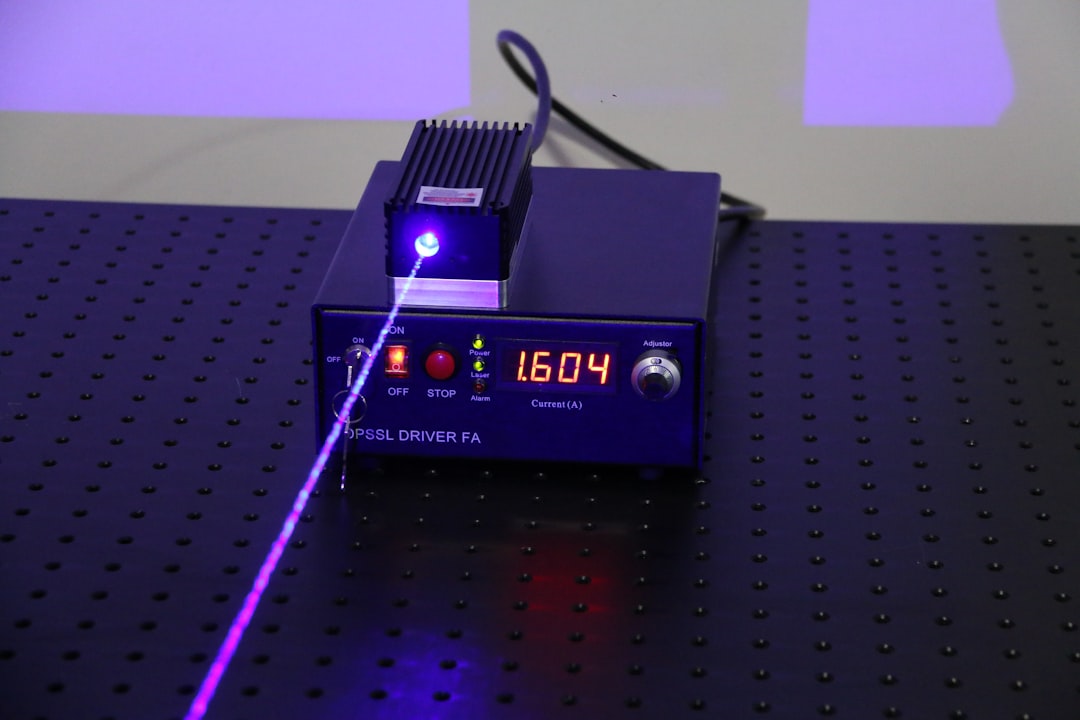
Quantum Light Source Advances Attosecond Science
New developments in quantum light sources, including bright squeezed vacuum, are enhancing the ability to observe electron motion on the shortest accessible timescales.
Section
117 stories · page 3 of 5
New developments in quantum light sources, including bright squeezed vacuum, are enhancing the ability to observe electron motion on the shortest accessible timescales.

New research from the NIH reveals how appetite-controlling brain cells respond to semaglutide, offering insights into why weight loss eventually stalls.

A French primate research initiative is moving forward despite warnings and opposition from the country's own ethics panel.

A global analysis of more than 21,000 river systems found that nearly 80% have steadily lost dissolved oxygen over the past four decades.

Research indicates that sleeping too little or too much is associated with accelerated biological aging across the brain, heart, lungs, and immune system.

A new multi-frame fusion strategy allows consumer-grade LiDAR sensors to image objects hidden from their direct field of view.

An internal OpenAI reasoning model has autonomously solved the planar unit distance problem, a decades-old challenge posed by Paul Erdős.

A new technique using temperature-sensitive solvents allows for the direct extraction of lithium from underground brines, bypassing traditional evaporation ponds.

The World Health Organization has upgraded the risk level to 'very high' as cases and deaths rise rapidly in the Democratic Republic of Congo.

Research highlights the presence of polycyclic aromatic hydrocarbons (PAHs) in foods prepared with high-heat cooking methods.

The European Medicines Agency has backed Novo Nordisk's Wegovy pill, clearing the path for the first oral obesity treatment in the European Union.

Researchers are examining how the current Ebola outbreak began as the World Health Organization declares a public health emergency of international concern.

Analysis of 2022 data from Cancer Research UK shows the number of diagnoses for the deadliest form of skin cancer has exceeded 20,000 for the first time.

An unprecedented hantavirus outbreak on a luxury cruise ship off West Africa is prompting scientists to re-evaluate how the deadly pathogen spreads.

Regulators have cleared a brain-computer interface developed by Neuracle Medical Technology for commercial use in patients with spinal cord injuries.

Researchers are utilizing artificial intelligence to automate theorem proving and formalize mathematical discoveries, shifting the role of human mathematicians.

A small phase I study indicates that a bespoke DNA vaccine can increase immune response and extend survival rates for patients with aggressive brain tumors.

Researchers at Indiana University Bloomington have been barred from their laboratory following a request from a federal funding agency.

World Health Organization officials warn that the current Ebola outbreak in central Africa may be larger than ascertained and spreading to new areas.

New research published in Nature identifies a previously unrecognized role for eosinophils in managing intestinal changes and immune protection during reproduction.

Research indicates that sleep durations between 6.4 and 7.8 hours are associated with slower biological aging, while both undersleeping and oversleeping accelerate the process.

New research indicates that smaller secondary faults in the Seattle Fault Zone rupture approximately every 350 years, presenting a more frequent seismic risk than the region's main fault.

The United States has restricted entry from three African nations following a World Health Organization declaration of a public health emergency of international concern.

A large-scale analysis of 232 million people across 200 countries reveals a widening divide in obesity trajectories between high-income and lower-income nations.